
When considering financing a vehicle, a renovation, a computer, or a major appliance, it is common to start with one question: “what monthly payment can I afford?” That question matters, but it can lead to an incomplete decision. A low payment may result from a long term, a large down payment, or costs that have not yet been considered.
Reverse budgeting for a financed purchase proposes taking the opposite path: first, identify the money that can be allocated to the purchase without compromising financial stability; then, set a prudent monthly limit; and finally, calculate what total price actually fits. This way, financing is assessed as a tool to pay for a previously defined purchase, rather than as a reason to increase spending.
What reverse budgeting is and why to look at the price first
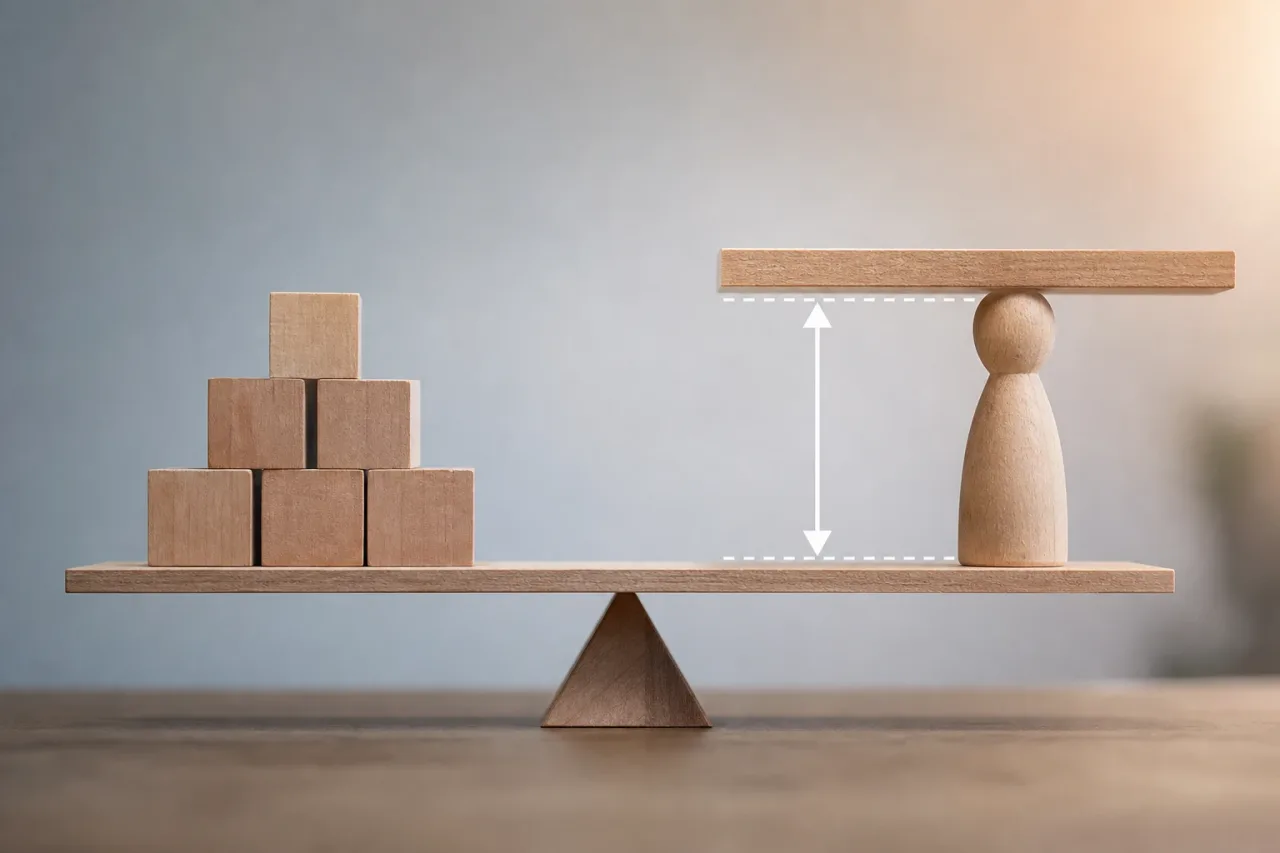
A conventional budget starts with a product and adds up its costs. The reverse approach begins with available resources and sets a spending ceiling. Its purpose is not to determine which financing option is best, but to help prevent an offer presented in monthly payments from concealing the full impact of the decision.
The monthly payment is not the only commitment. The down payment, interest, applicable fees, any linked insurance, taxes or closing costs where applicable, and the subsequent cost of use also come into play. In addition, an item may lose value, require maintenance, or cease to be useful before it is fully paid off.
Setting a maximum price before comparing options makes it possible to ask more useful questions: does the purchase meet a specific need? Can I keep my emergency savings? How much will I pay in total? Will the item last as long as the payment commitment? If the answers raise doubts, lowering the target price, increasing savings beforehand, postponing the transaction, or considering alternatives may be more reasonable than adjusting the payment at any cost.
Step 1: define the need, use, and alternatives
Before assigning figures, it is advisable to clearly describe the problem the purchase must solve. Replacing an essential item that has stopped working is not the same as upgrading one that still serves its purpose. Defining the intended use helps avoid paying for features, size, extras, or an early replacement that do not provide sufficient value.
It may help to write down frequency of use, how long the item is expected to be used, essential requirements, and nonessential elements. In a renovation, for example, it is useful to separate necessary repairs from aesthetic improvements. In technology, the performance required for work can be distinguished from optional features.
It is also worth comparing alternatives to buying immediately: repairing the current item, purchasing a lower-priced option, buying second-hand with appropriate checks, renting, or waiting until a larger down payment has been saved. Not all of these options will be suitable, but considering them reduces the pressure to accept the first seemingly affordable payment.
Step 2: calculate the money available without exhausting your safety net
The next step is to separate savings intended for the purchase from money that serves other purposes. Essential expenses—housing, food, utilities, transportation, healthcare, and obligations already assumed—should not become a source of funding for an acquisition. Nor is it advisable to count uncertain income or money that will be needed soon as available.
The emergency fund deserves specific treatment. Its purpose is to address unexpected situations, such as an urgent repair, an interruption in income, or a healthcare expense. Using it entirely as a down payment may make a purchase seem affordable today while leaving the household more exposed tomorrow. The amount a person needs to set aside depends on their circumstances, income stability, and responsibilities; there is no universal amount.
An orderly way to calculate a potential down payment is to start with liquid savings and subtract amounts committed in the short term, an emergency reserve that should be preserved, and the unavoidable upfront costs of the purchase. The result is not an obligation to spend all that money: it is only an initial limit. Keeping an additional portion as a buffer can provide flexibility.
Step 3: choose a maximum payment and a sensible term
The maximum payment should come from actual cash flow, not from the difference between income and expenses in an exceptionally favorable month. To estimate it, several months of net income and usual expenses can be reviewed, including recurring payments that are sometimes forgotten: insurance, maintenance, subscriptions, taxes, education, or family support.
After covering essential expenses, desired savings, and existing debts, the remaining margin does not necessarily have to be allocated in full to a new payment. A conservative approach leaves room for price changes, unexpected expenses, and future goals. The resulting figure should be comfortable in normal months too, not merely possible in the best-case scenario.
The term adds a second condition. Extending it can reduce the monthly payment, but it generally increases the total amount paid and prolongs the obligation. In addition, it is prudent to avoid financing that clearly lasts longer than the item’s expected useful life or the period during which it is expected to be needed. A technology product may become obsolete before an excessively long term ends; a renovation may require additional unforeseen expenses while financing is still being repaid.
An affordable monthly payment does not, on its own, prove that the price is appropriate. It must fit the available liquidity, the total cost, and the expected usefulness of the purchase.
Step 4: gather all the costs of the transaction
To compare the budget limit with a product’s price, it is necessary to distinguish between the advertised price and the total cost. The down payment reduces the amount financed, but it does not reduce the cost of the purchase: it is money paid from the outset. It is added to the financed principal and interest, as well as any fees or contractual costs stated in the documentation.
It is also advisable to estimate the subsequent expenses that arise from owning the item. Depending on the case, these may include installation, transportation, maintenance, repairs, consumables, energy, insurance, or necessary accessories. Not all of them are financed or shown in the monthly payment, but they affect the monthly budget and whether the price is suitable.
Before signing, it is important to read the pre-contractual information and check the total amount owed, the number and amount of payments, the conditions for early repayment, and the associated requirements. If a figure is not understood, requesting a written explanation or pausing the decision is preferable to making assumptions.
Step 5: turn the monthly limit into a maximum price
Once a maximum down payment, a maximum monthly payment, and a reasonable term have been defined, it is possible to estimate the amount that could be financed. This requires knowing the specific terms being considered, because interest and costs change the relationship between the payment, term, and amount borrowed. A financing calculator can be useful for exploring scenarios, but its results depend on entering all information correctly.
The practical method is to test financing amounts below the maximum and verify two things: that the payment does not exceed the conservative limit and that the total amount to be repaid, added to the down payment and upfront costs, does not exceed the established spending ceiling. If specific terms are not yet available, there is no need to guess an interest rate: a lower target price can be set and room left until complete information is available.
The maximum purchase price is not simply “down payment plus financeable amount.” It must include the essential costs of starting to use the item and leave room for foreseeable subsequent expenses. If the result requires cutting into that protection, the limit has been calculated too optimistically.
Hypothetical example: the same need, a different effect on liquidity
Imagine someone who needs to replace an essential household appliance. After reviewing their budget, they decide to preserve their emergency fund and set a moderate down payment, a monthly payment that does not disrupt their savings goals, and a term that does not exceed the appliance’s expected useful life.
They find two options that meet the same basic need. The first has a higher price and includes features they would barely use. To make the payment seem manageable, it would require financing over a longer period or allocating a very large portion of their savings to the down payment. The second meets the essential requirements, allows them to keep more liquidity, and leaves room for installation, maintenance, or an unrelated breakdown.
The more expensive option might show a similar payment if the term or down payment changes, but its consequences are not the same. Reverse budgeting reveals that difference by looking at the full picture: upfront cash, debt duration, total amount paid, and the ability to respond to unexpected events. Choosing the lower price is not always the required conclusion, but it may be consistent if the additional features do not justify the greater effort.
Final checks and mistakes to avoid

Before applying for financing, test the budget against less favorable scenarios. Ask yourself what would happen if income temporarily fell, a significant repair arose, or the item lost its usefulness sooner than expected. If the payment works only when nothing goes wrong, it may be a sign that the maximum price needs to be reviewed.
- Starting with the advertised payment: it can draw attention away from the total price, the term, and costs not included.
- Using up all available savings: this leaves less ability to respond to urgent expenses.
- Financing extras without assessing their use: this increases the price and, potentially, the duration of the commitment.
- Forgetting operating expenses: a purchase can generate additional monthly costs that reduce the actual margin.
- Choosing the term only to lower the payment: this can increase the total cost and extend payments beyond the item’s usefulness.
The goal is not to find the smallest payment, but a total price that can be afforded without putting essential needs, the emergency reserve, or other important plans at risk. Setting that limit before looking at offers provides a clear benchmark for comparison and supports more informed purchasing decisions.
Sources and resources
- Financial literacy — OECD
- Consumer credit information — European Commission
- Financial education portal — Banco de España & CNMV